Back to Blog
· Don Robinson
NLP: Rewrite the Script. Live Your Purpose. ✍️
Safety Nervous System Transformation MASCSS Whole-Person Care NLP Neuroscience Trauma-informed
Stories are powerful, not just the ones we tell out loud, but especially the ones we rehearse quietly, over and over, until they begin to feel like truth.
The brain is beautifully efficient. Through repetition, neural pathways strengthen. What fires together wires together.
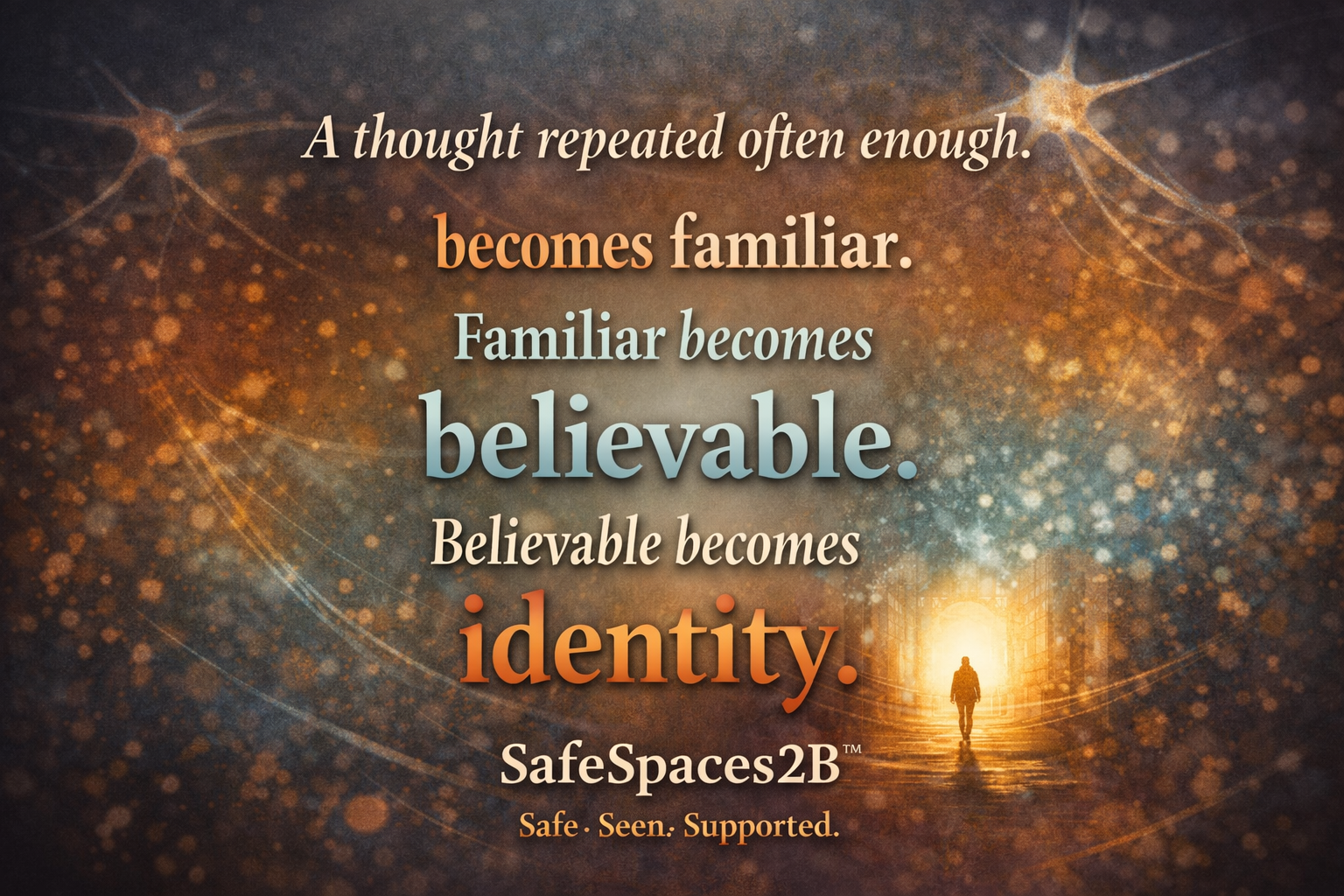
A thought repeated often enough becomes familiar. Familiar becomes believable. Believable becomes identity.
That is neuroplasticity at work.
And this is where Neuro-Linguistic Programming (NLP) becomes a lantern in the cave.
It gently helps us step back from the old script. It teaches us to notice the language, the images, the tone of the internal narrator. It helps us ask, “Is this story accurate… or simply rehearsed?”
When we slow down, breathe, and observe instead of merge with the story, something shifts.
We realize:
We are not useless.
We are not hopeless.
We are not helpless.
We are not unlovable.
We are not a failure.
Those were survival interpretations, protective meanings, attempts by a younger version of ourselves to make sense of pain.
And now, with compassion, we can update the script.
NLP helps us realize:
We are useful.
We are hopeful.
We have agency.
We are deeply lovable.
We are learning, not failing.
Notice the difference in your body as you read each list.
Which statements tighten the chest?
Which ones soften it?
That somatic response matters. The body often reveals whether we are repeating an old memory or stepping into present truth.
Scripture echoes this renewal process. “Be transformed by the renewing of your mind,” (Romans 12:2). Renewal implies replacement, not denial, not pretending.
As Neuroscience teaches us, old neural grooves can be reshaped. Old villains can be unmasked. The story can be revised not by force, but by awareness.
You are not the worst thing that happened to you.
You are not the harshest sentence you ever spoke over yourself.
You are a story still being written. ✍️
And guess who gets to participate in the editing. 😉
You! 🫵